Imagine this: It’s a hot summer day, so you take your puppy to a park with a pond to play and cool off. Your pup frolics happily in the water and takes an occasional drink. After an hour or so, you go home with your young dog, happy and tired from an exciting afternoon.
A couple of days later, the worst happens. Your puppy starts throwing up, doesn’t want to eat, and becomes lethargic with signs of pain. Not knowing what’s wrong, you take her to the veterinarian, who diagnoses her with leptospirosis. This potentially life-threatening bacterial infection can lead to kidney and liver failure.
“Leptospirosis can occur at any time of year, but it’s more likely to infect pets during warmer and more humid weather, which we experienced a lot this summer,” explained Dr. Shawn Kearns, Internal Medicine Specialist at the MSPCA-Angell. Leptospirosis is carried and spread by wildlife, including rodents, so any areas we share with them may contain the bacteria. Both unvaccinated and vaccinated dogs are susceptible.”
“If your pet shows symptoms of leptospirosis such as vomiting, lethargy, or loss of appetite, it’s important to get them to the veterinarian quickly,” she said. Multiple life-threatening complications can develop with the infection, and aggressive measures may be needed to try to save their life when that happens. “We’re fortunate at the MSPCA-Angell Boston to have the most cutting-edge technology that puts us in the best possible position to treat and save pets.”
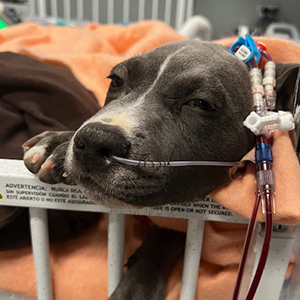
A new extracorporeal therapy at the MSPCA-Angell uses a machine called Carpediem™ (Cardio-Renal Pediatric Dialysis Emergency Machine) which is designed to facilitate hemodialysis for smaller patients by requiring less blood circulation. This is important because traditional hemodialysis machines, based on those used with human adults, are problematic when treating pets due to the machine’s need for more (donated) blood to operate. The MSPCA-Angell is one of only two specialty veterinary hospitals in New England that has these machines.
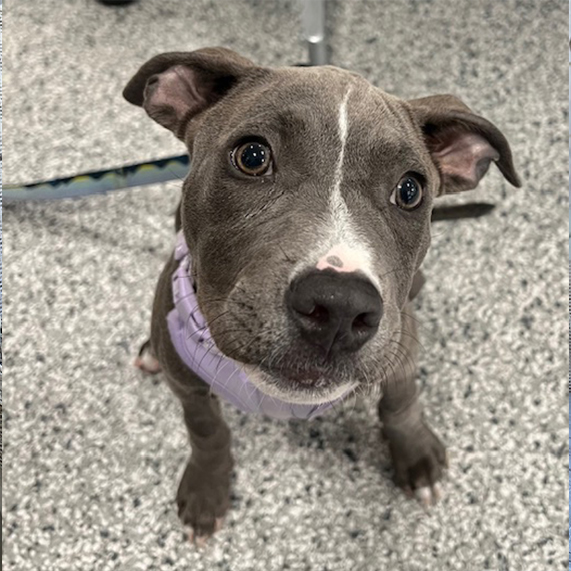
It was a lifesaver for Lulu, a special patient of Dr. Kearns. Lulu was 2 months old when her worried owners brought her to the MSPCA-Angell in May. Her local veterinarian had diagnosed her with leptospirosis and referred her to Angell, where they were confident that she would get the life-saving treatment she needed.
“Lulu was one of the first patients to use the new Carpediem system,” Dr. Kearns explained. “It took a few weeks, but she’s back to acting like a normal, healthy puppy and thriving in her home once again, something that would not have been possible without the hemodialysis she received from the Carpediem.”
Since Lulu’s treatment, the MSPCA-Angell’s Extracorporeal Therapy Unit has acquired even more new technology to combat toxic poisoning, another danger to pets like Lulu.
“This summer, we acquired a hemoperfusion machine, which can more quickly — often in just a few hours – remove a lot of different toxins from pets of many different sizes, and, similarly to the Carpediem, it requires less donated blood. The speed of the machine can prevent serious damage to the kidneys.”
“Machines like these [hemoperfusion and Carpediem] are real game-changers in animal healthcare,” added Dr. Kearns, who is leading the implementation of the new equipment along with Dr. Courtney Peck of the MSPCA-Angell West’s Emergency and Critical Care service.
Lulu’s family expressed immense gratitude for the life-saving services the MSPCA-Angell team provided. They specifically mentioned that Dr. Kearns and Dr. Juliana Picard did a fantastic job treating Lulu for leptospirosis and maintained excellent communication throughout her two weeks at the ICU. “We can’t thank them enough!” they exclaimed.