-
Adopt
-
Veterinary Care
Services
Client Information
- What to Expect – Angell Boston
- Client Rights and Responsibilities
- Payments / Financial Assistance
- Pharmacy
- Client Policies
- Our Doctors
- Grief Support / Counseling
- Directions and Parking
- Helpful “How-to” Pet Care
Online Payments
Emergency: Boston
Emergency: Waltham
Poison Control Hotline
-
Programs & Resources
- Careers
-
Donate Now
Jim Joyce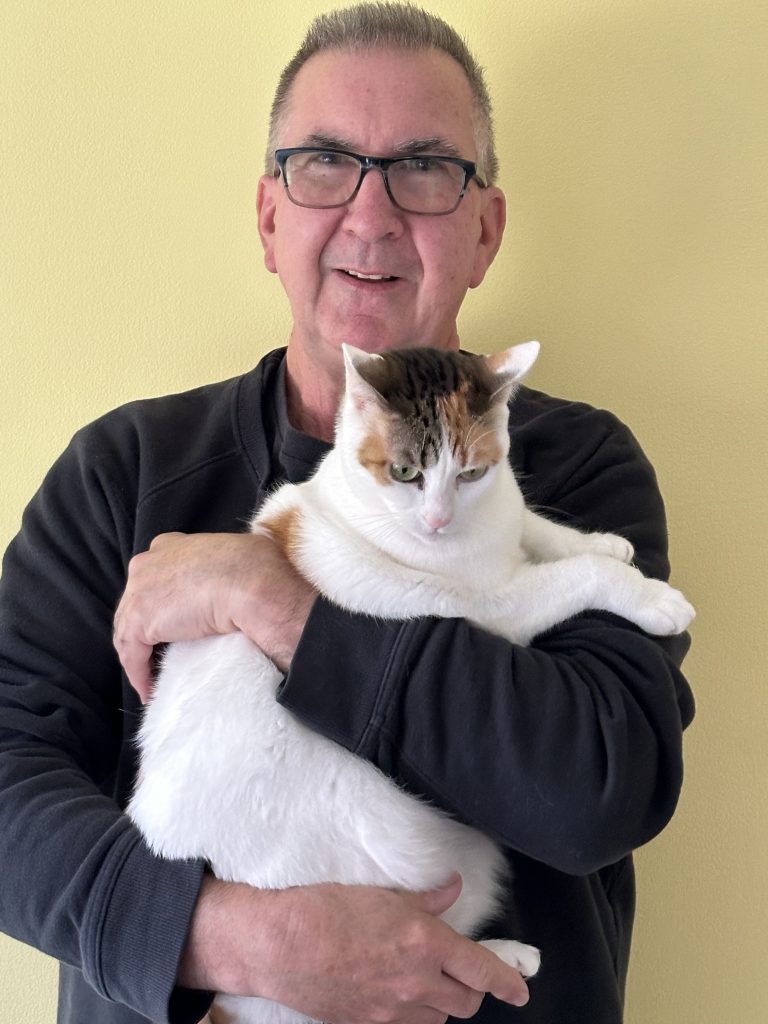
Jim’s passion for animal advocacy began in 1989 with the adoption of a rescued kitten, which gradually opened his eyes to issues like puppy mills and motivated him to support stronger animal-welfare legislation. Over time, he became a self-taught naturalist and conservationist, closely monitoring Bald Eagles along the Charles River, including MK and her offspring “25/C”, both tragically lost to anticoagulant rodenticide poisoning, an issue that became deeply personal. After retiring, Jim co-founded Friends of Horn Pond to protect local conservation land and began assisting wildlife rehabilitators with numerous rodenticide-related cases. In 2024, he expanded his impact by joining the Woburn Conservation Commission, co-authoring Earthwise Aware’s Rat Poison (AR) Brigade participatory science project, and petitioning the Massachusetts Department of Agricultural Resources for urgent action on rodenticide regulation.
1. What inspired you to join the C.A.L. Program?
My inspiration for joining was based on the proven success of the program and the opportunity to be a part of a community of advocacy leaders across Massachusetts.
I’ve been involved in the rodenticide issue dating back to 2015 so when I found the MSPCA sponsoring the rodenticide legislation in the current legislative session, then I started looking closely at all the animal legislation being supported and the MSPCA’s proven track record of success over the years. I just knew that a truly structured and well-designed approach for advocating on all issues was what I needed and I found that the C.A.L. program was perfectly suited for me.
2. What has been the most meaningful part of your experience so far?
Without a doubt, it’s the people in the program. Getting to know folks who I would never have known if not for the C.A.L. program. In the 1st monthly meeting I attended, I could feel the passion, dedication, camaraderie, widely varied experiences, willingness to help and to share with others. Everyone joining together as a team and then moving forward in the same direction all for the greater good. It doesn’t get better than that.
3. Can you share a moment when you felt you truly made a difference for animals?
There are many moments and experiences that have helped me along this journey. I could tell you about wildlife rescues, anticoagulant rodenticide toxicity cases, bait stations surveys, the testimonies, and all that relates to the impact of rodenticides to wildlife. But I’ll tell you about the most recent moment. The moment that I sat down to write my testimony in support of the pet shop legislation. I thought long and hard about my personal experiences with my cats and dogs over the years. I felt as though I was writing an impassioned plea for help on behalf of all animals and their families. That’s when I thought that perhaps my testimony would make a difference for the better treatment of animals as they cannot speak for themselves.
4. How has being part of this program changed your perspective on animal advocacy?
It’s given me a more well-rounded view of all the animal issues, how they intersect with each other, and then the ability to connect with community advocacy leaders from across the state who can provide the guidance and expertise needed to become an effective animal advocate.
5. What’s something surprising you’ve learned since joining?
I’ve learned that I’m not on my own while trying to navigate all the aspects of animal advocacy. What’s amazing is that everyone brings an expertise and passion to the team which has a synergistic effect across the community.
6. What’s your favorite aspect of the program and why?
My favorite aspect is the organization and structure of the program. The education, communication, and monthly tasks are designed to drive animal legislation forward but of equal importance, we are leaning to be effective animal advocates. Every month, a different topic is presented and discussed so are continuously learning and continuously improving our skills.
7. Why do you think animal advocacy is important today?
In my opinion, animal advocacy is more important than ever before. It’s not only about animal welfare, it’s about protections for families, housing, separation, and human health. Today, more and more families and individuals are faced with making difficult choices between where they live and the ability to keep their companion pet. Yet, they are faced with significant costs when purchasing a pet from a pet shop and then faced with the veterinary costs when their pet is found to be sick or has an underlying condition. They are faced with having to give up their pet, a loved family member, when their living arrangements change or their housing policies change. Advocating for animals truly becomes advocating for people, their pets, and peace of mind.
8. What would you say to someone who’s thinking about joining the program?
I’d say join today! You’ll become part of a community that will provide you with the tools, skills, and support needed to be a successful animal advocate and a successful community leader.
9. How has this experience helped you grow as a leader and advocate?
I feel as though the education and knowledge gained since becoming a CAL has positioned me to be a far more effective advocate and a leader. I’ve incorporated all this knowledge into my local and statewide efforts on the rodenticide issue and now on the animal issues. I’m a better communicator and a better collaborator because of it.
10. What’s one message you wish more people understood about animal advocacy?
My message to people would be that animal advocacy isn’t only about animals. I’d about our community, our families, our friends, and the benefits of having animals in our lives. It’s about protecting our animals which in turn is protection for ourselves.


