From an online gift to a charitable gift annuity, your contribution will have a significant impact in the lives of thousands of animals.
The Ultimate Guide to a Healthy Rabbit Diet
Diet is Crucial for Rabbits
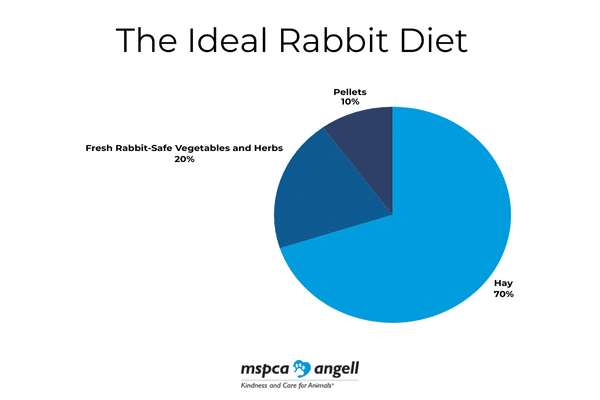
A rabbit’s diet is one of the most important factors in keeping them healthy and thriving. Rabbits require a balance of hay, vegetables, and pellets to support their digestive system, dental health, and overall well-being. Rabbit diet should consist of about 70% hay (unlimited access), 20% rabbit safe veggies/herbs and 10% pellets.
Best Hay for Rabbits
Rabbits should have unlimited access to hay every day. Hay provides essential fiber that keeps the gastrointestinal tract moving and supports cecal fermentation. Hay also is foundational for rabbits’ dental health. Rabbits’ teeth never stop growing, and the grinding motion of chewing hay naturally wears down molars and prevents dental overgrowth.
Recommended hay types include:
Timothy Hay
Oat Hay
Orchard Grass Hay
Avoid Alfalfa Hay– Alfalfa is high in calcium and protein and is typically only appropriate for baby rabbits or pregnant/lactating does
Rabbit Safe Vegetables and Herbs
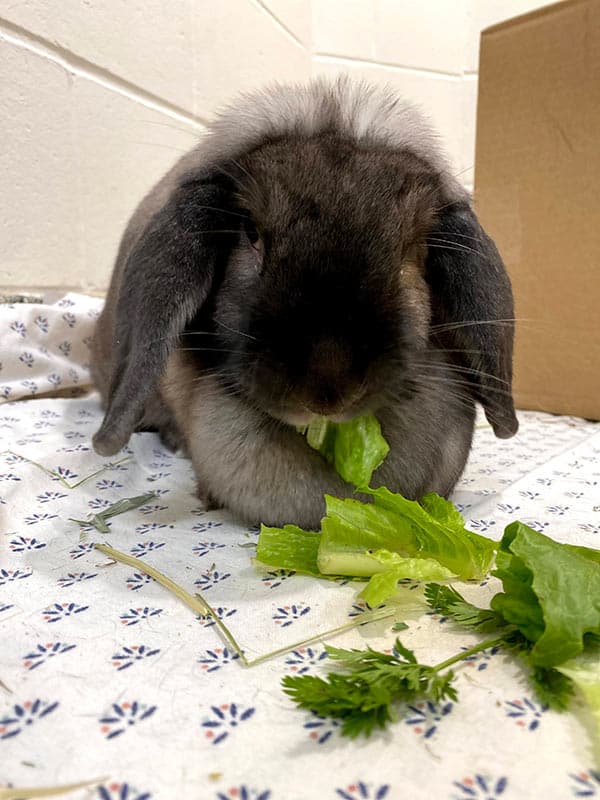
Fresh vegetables add important nutrients and variety to a rabbit’s diet. Always introduce new vegetables gradually over several weeks and monitor for digestive changes.
General Guidelines
Wash thoroughly and avoid pesticides.
Offer a variety of greens daily.
Vegetables high in calcium should be given in moderation (2–3 times per week).
Rabbit Safe Greens and Herbs
Here’s a list of safe vegetables and herbs for rabbits, with calcium content noted where relevant
Arugula*
Asparagus
Basil
Beet Tops*
Caraway
Celery
Chard
Cilantro
Clover
Collard Greens*
Cucumber
Dandelion Greens*
Dill
Endive
Escarole*
Fennel*
Green Pepper
Kale*
Lemon Balm
Lettuce (romaine, red & green leaf)
Lilac
Marigold
Marjoram
Mint
Mustard Greens*
Parsley*
Radish Tops
Sage*
Savory
Spinach*
Watercress*
Zucchini
*These greens are high in calcium and should be given in moderation (2–3 times per week). Kale and sage are particularly high in calcium.
Pellets for Rabbits
While pellets should make up only about 10% of the rabbit diet, they are still an important source of balanced nutrition. Choose a high-quality brand made specifically for rabbits, with no added seeds, nuts, or dried fruits.